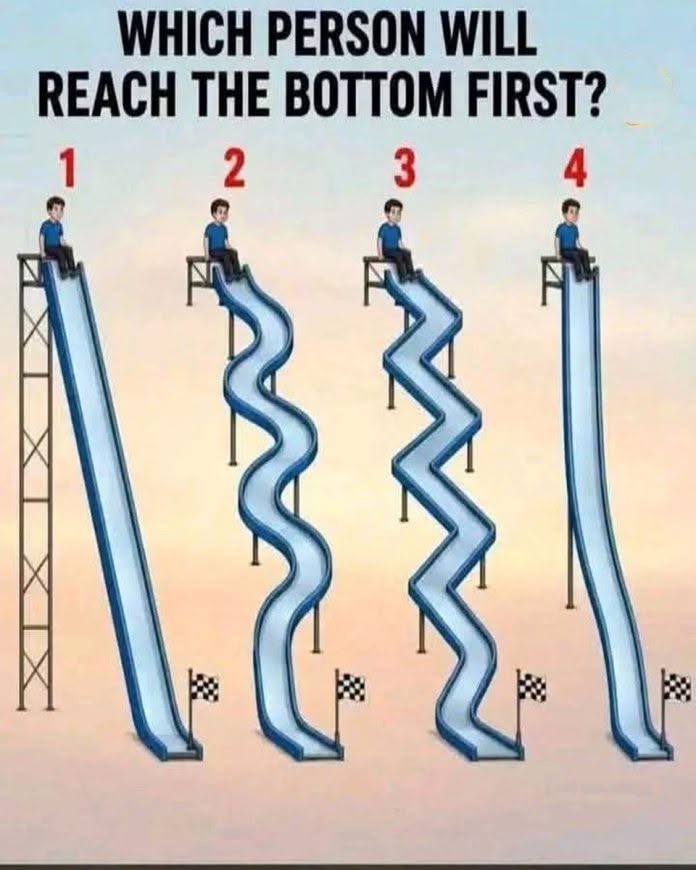
of its journey. Once it has gained considerable speed, it can continue moving quickly along a gentler section.
This principle is related to a famous problem in classical physics known as the brachistochrone problem.
The brachistochrone problem asks a deceptively simple question: What shape should a frictionless track have so that an object traveling under gravity reaches a lower destination in the shortest possible time?
The surprising result is that the fastest path is not generally a straight line. For an ideal track between two points at different heights, the