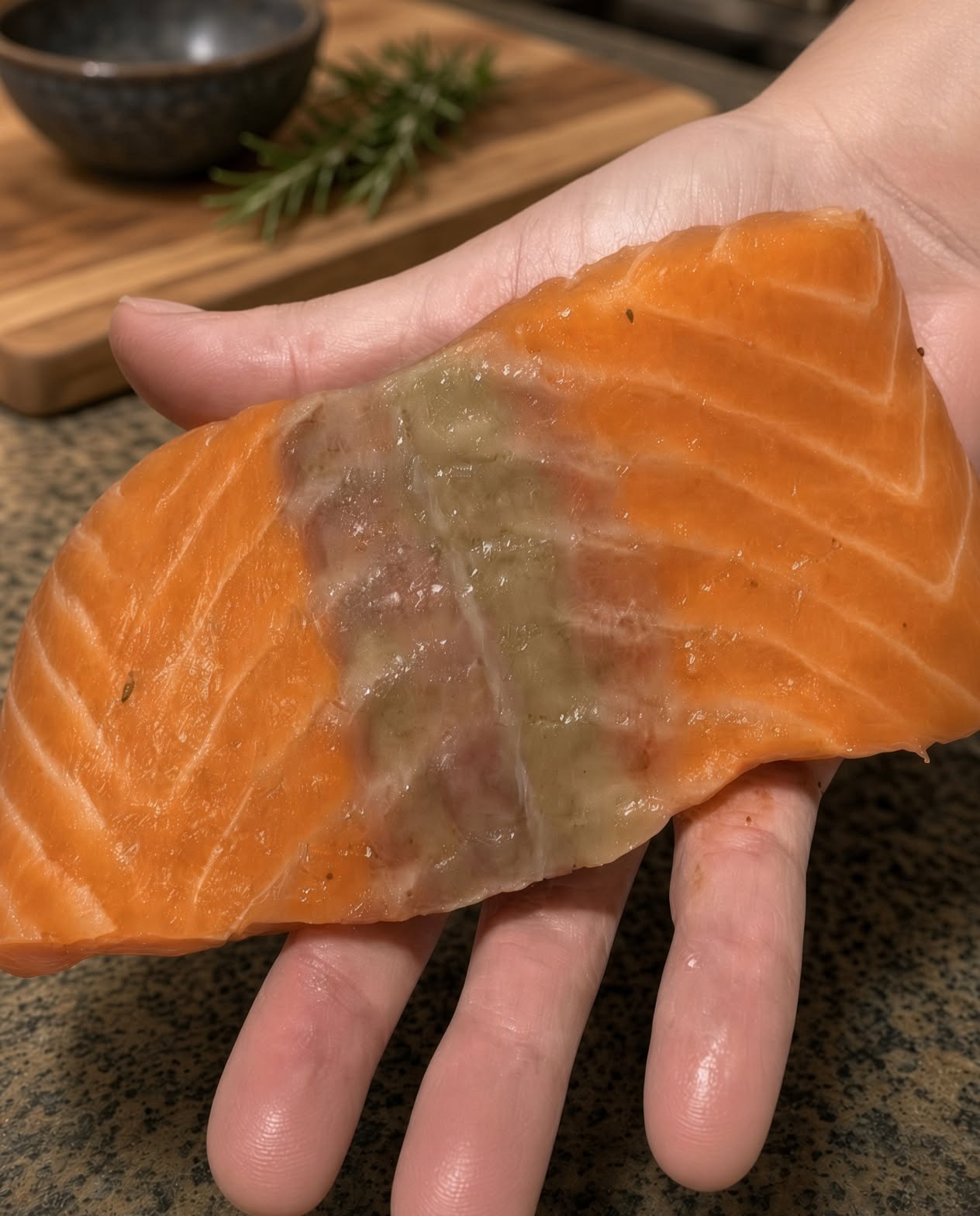
surface of the flesh, they produce chemical compounds that alter both the texture and color of the fish.
A yellowish or greenish film across the middle of a fillet—especially when accompanied by a slippery or sticky texture—is a definitive indicator of advanced bacterial activity. Eating fish in this condition carries a high risk of digestive upset and foodborne illness, making it unsuitable for consumption under any circumstances.
How Long Can Raw Salmon Stay in the Refrigerator?
Time is one of the most critical elements in seafood safety. Even under ideal