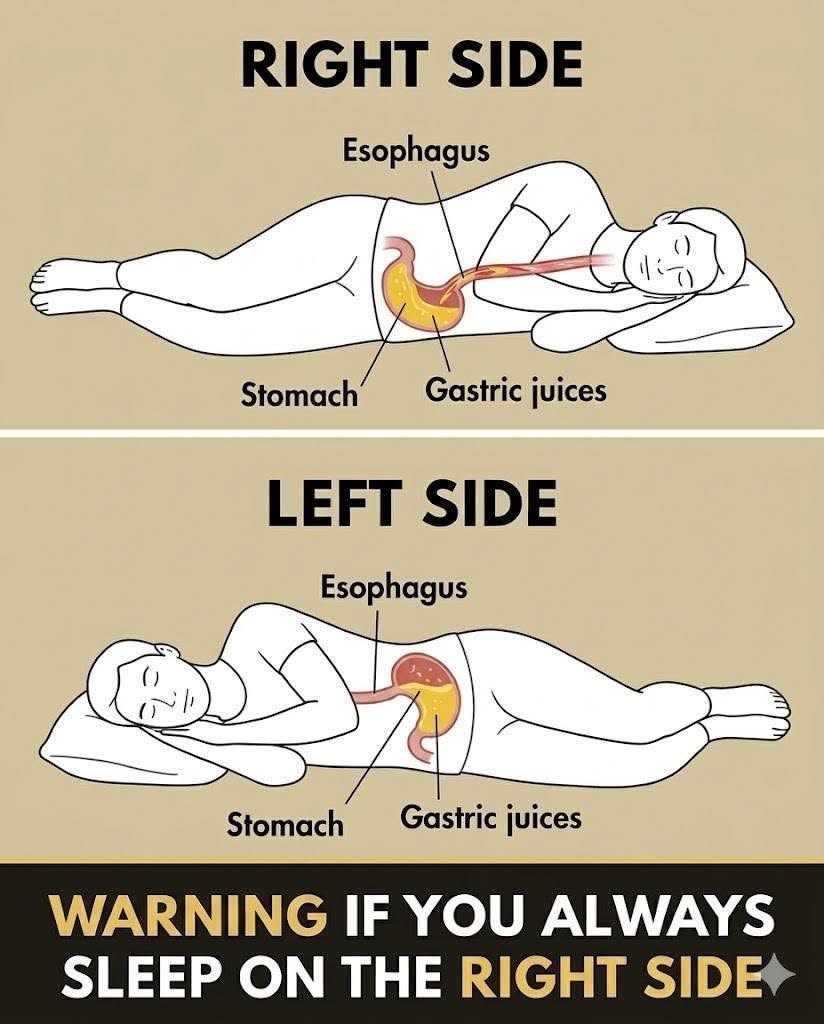
- toward the airway. This may narrow the passage through which air flows, producing vibrations that cause snoring.
Side sleeping may help reduce snoring for some people by changing the position of these tissues. It is often suggested as a simple measure for people whose snoring becomes worse when they sleep on their backs.
However, snoring is not always harmless. Loud, frequent snoring accompanied by pauses in breathing, gasping, choking sounds, morning headaches, or excessive daytime sleepiness can be a sign of obstructive sleep apnea. This condition occurs when the upper